While we were all preoccupied with the possibility of rain, this week was almost perfect for working in the field with only some rain in the early morning hours (before we were awake) and an occasional thunderstorm on the horizon. In terms of the project, this meant that we were able to wrap up the current season in terms of backfilling and much of the laboratory work.
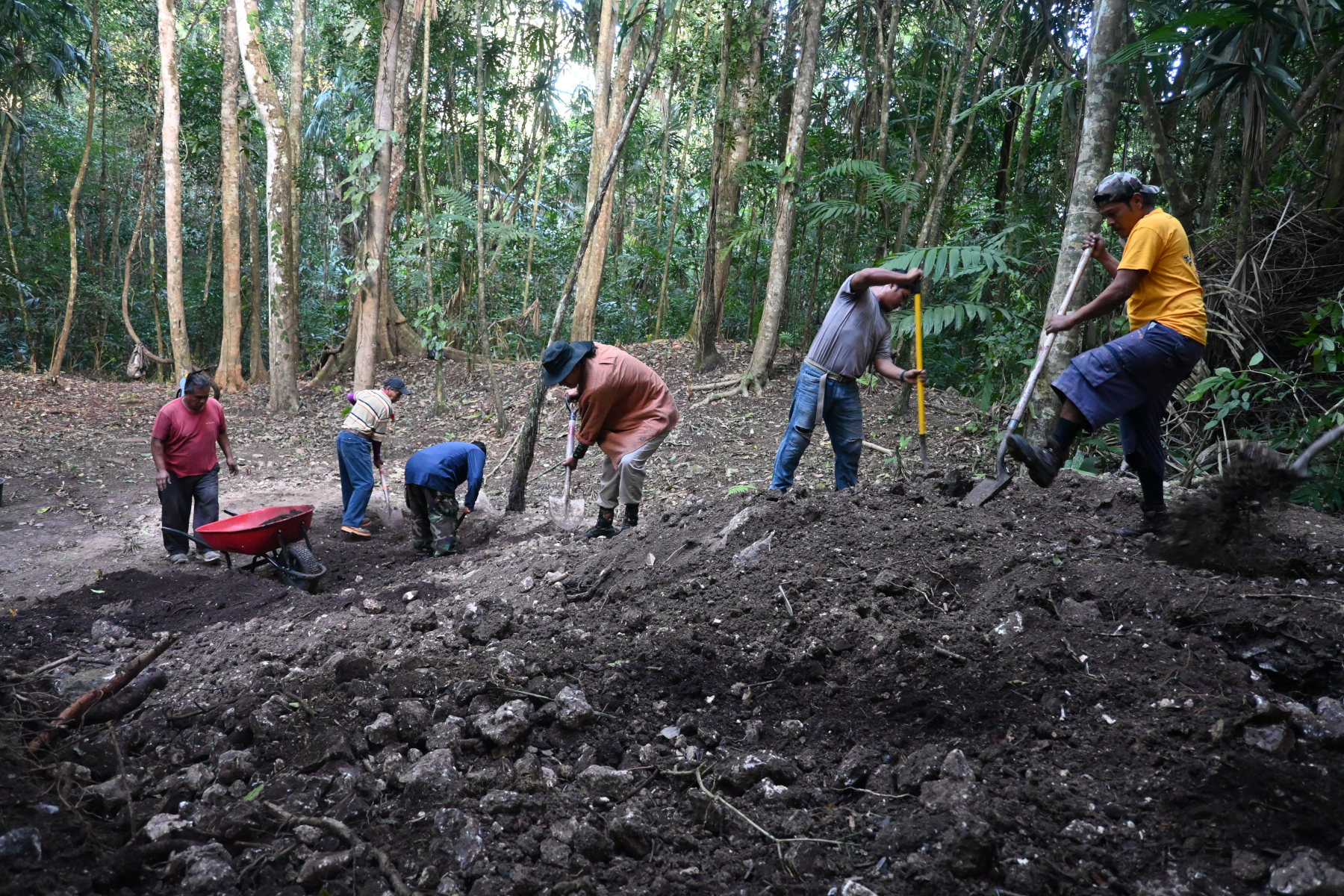
Monday and Tuesday saw the beginning of the final labwork for everyone and the completion of washing and drying of all of the bone. On these two days, the men all went out to the field (with Jacob) and completed backfilling everything that had been exposed since the beginning of February. They first completed backfilling C244B (Fresco) and then moved onto C246B (Brie). C245 (Havarti) was completed on Tuesday morning and C243B (H9) was backfilled on Tuesday afternoon.
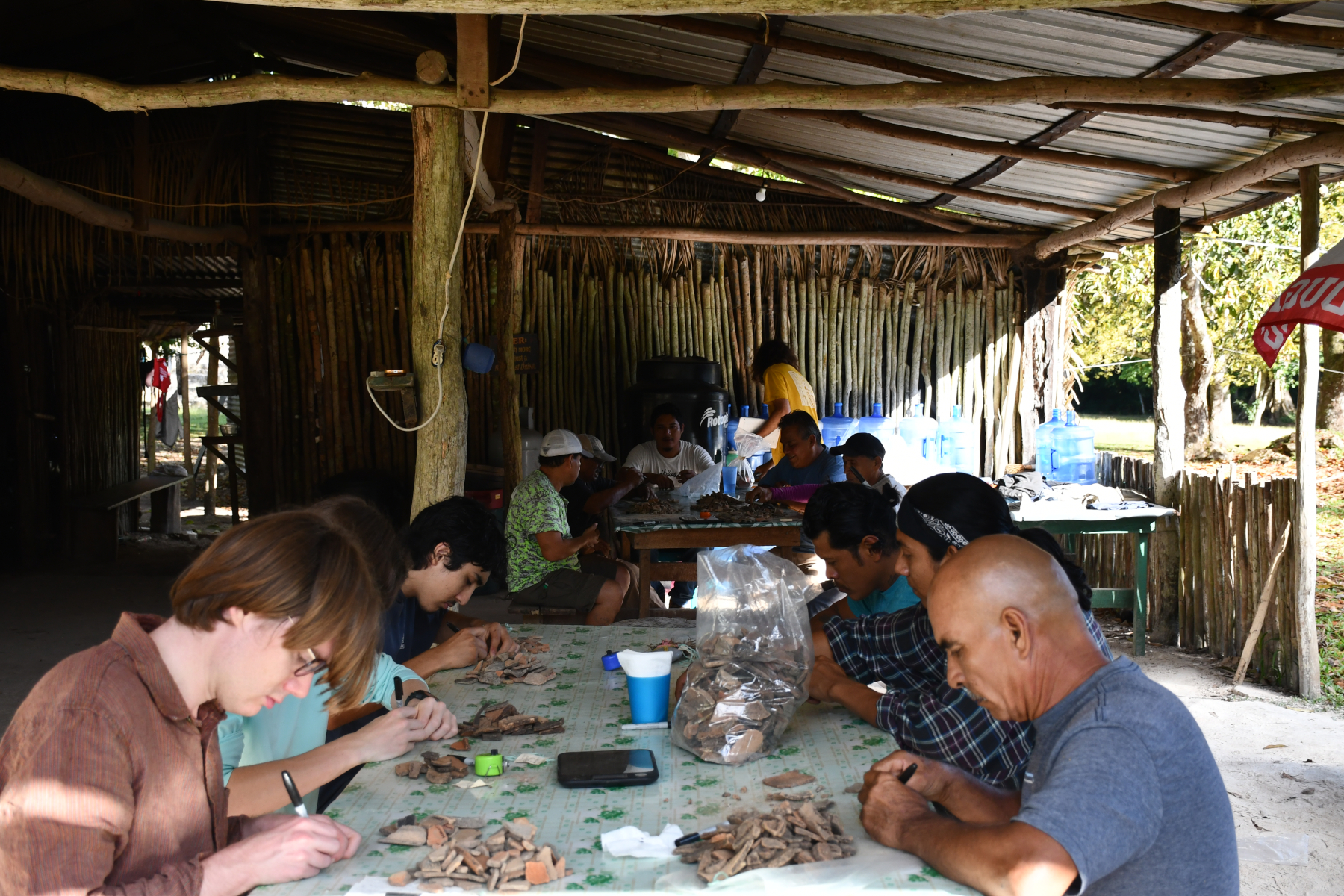
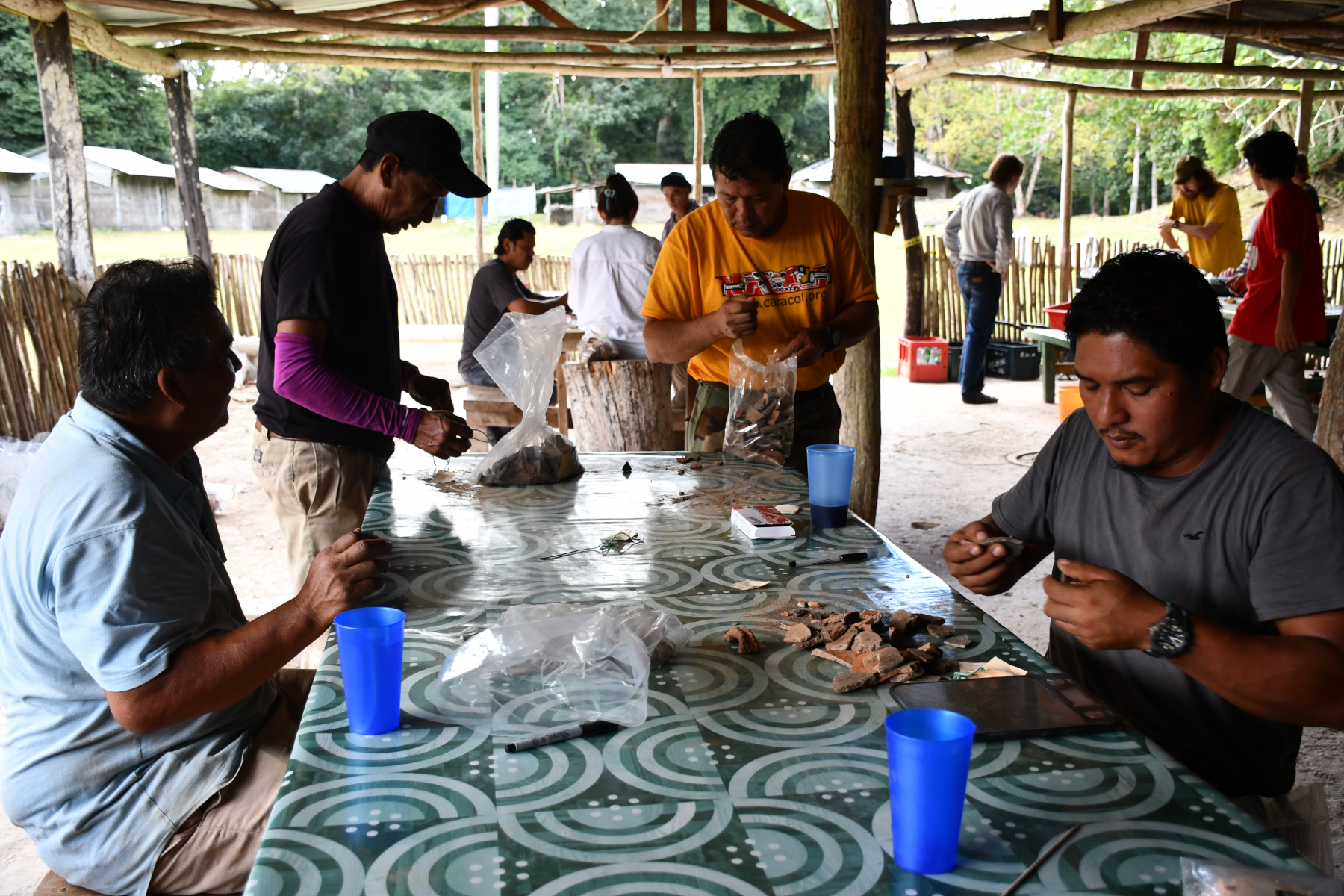
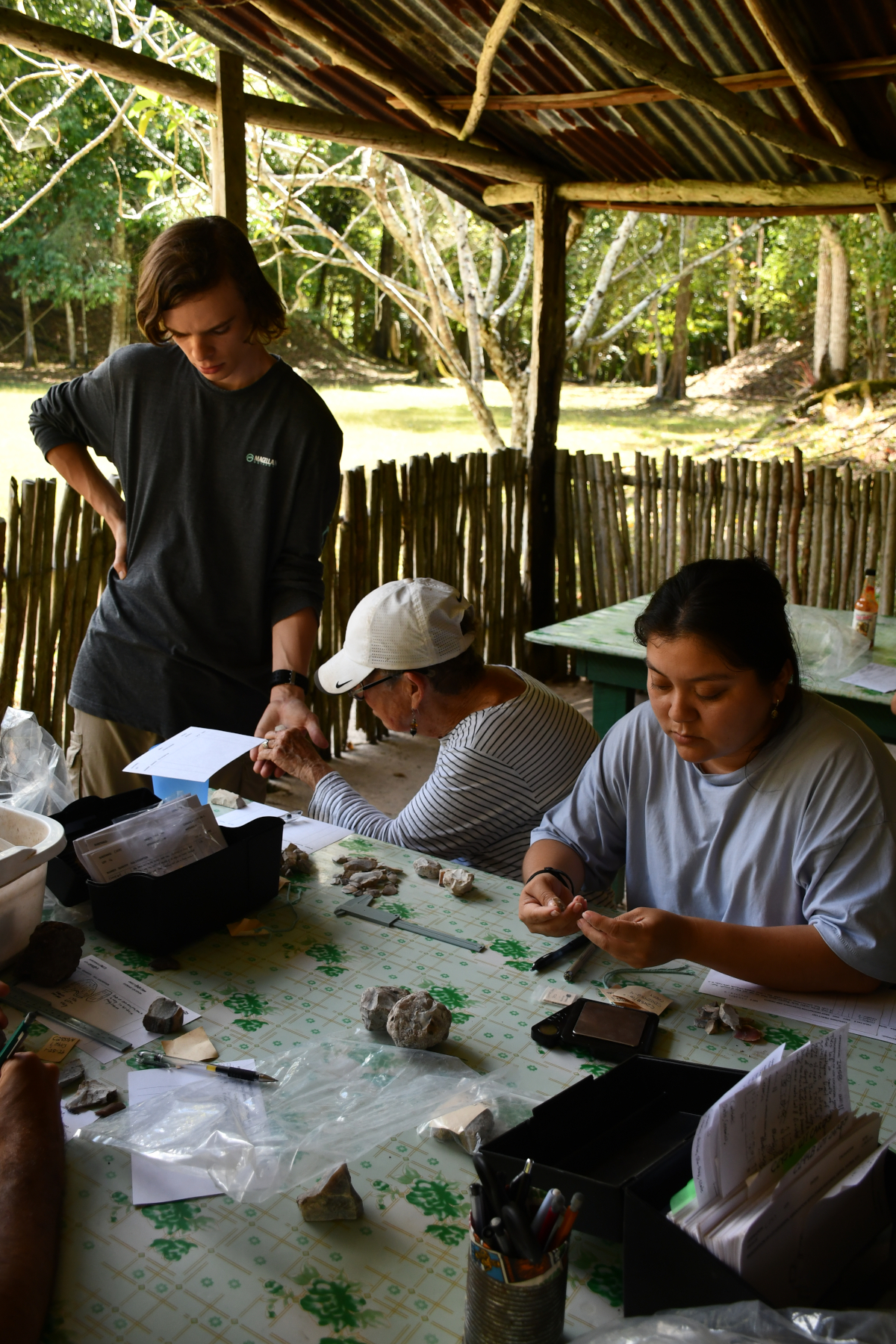
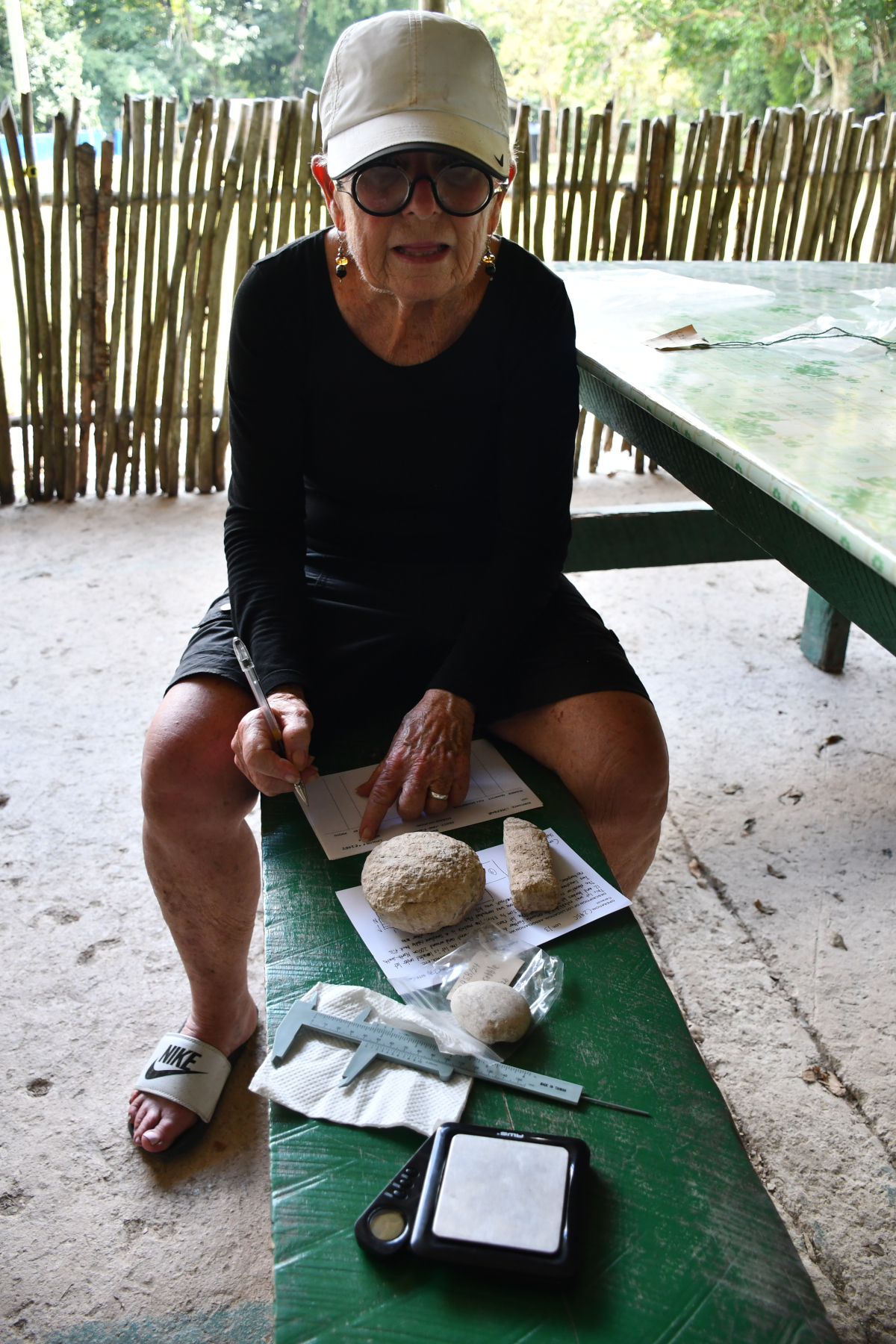
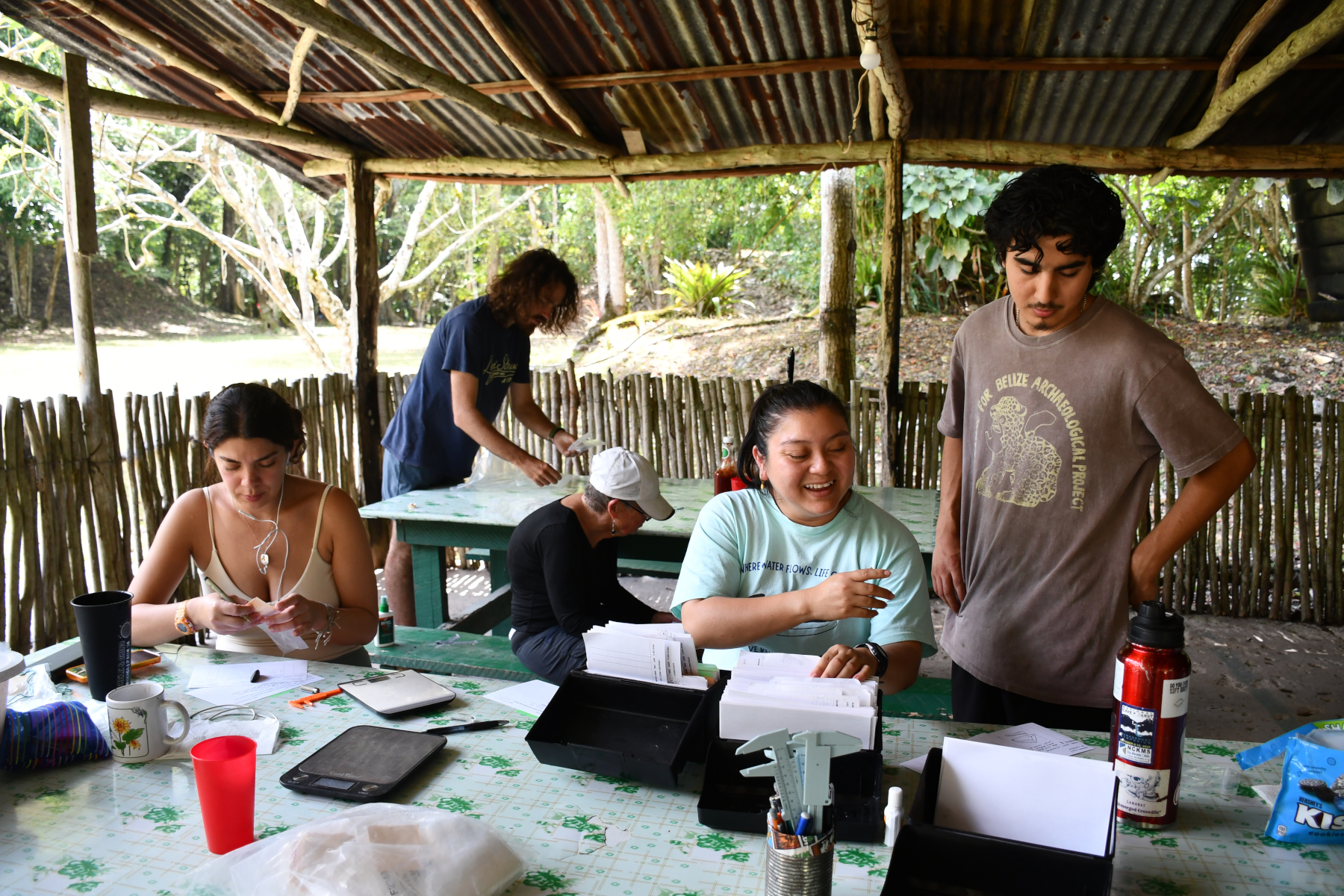
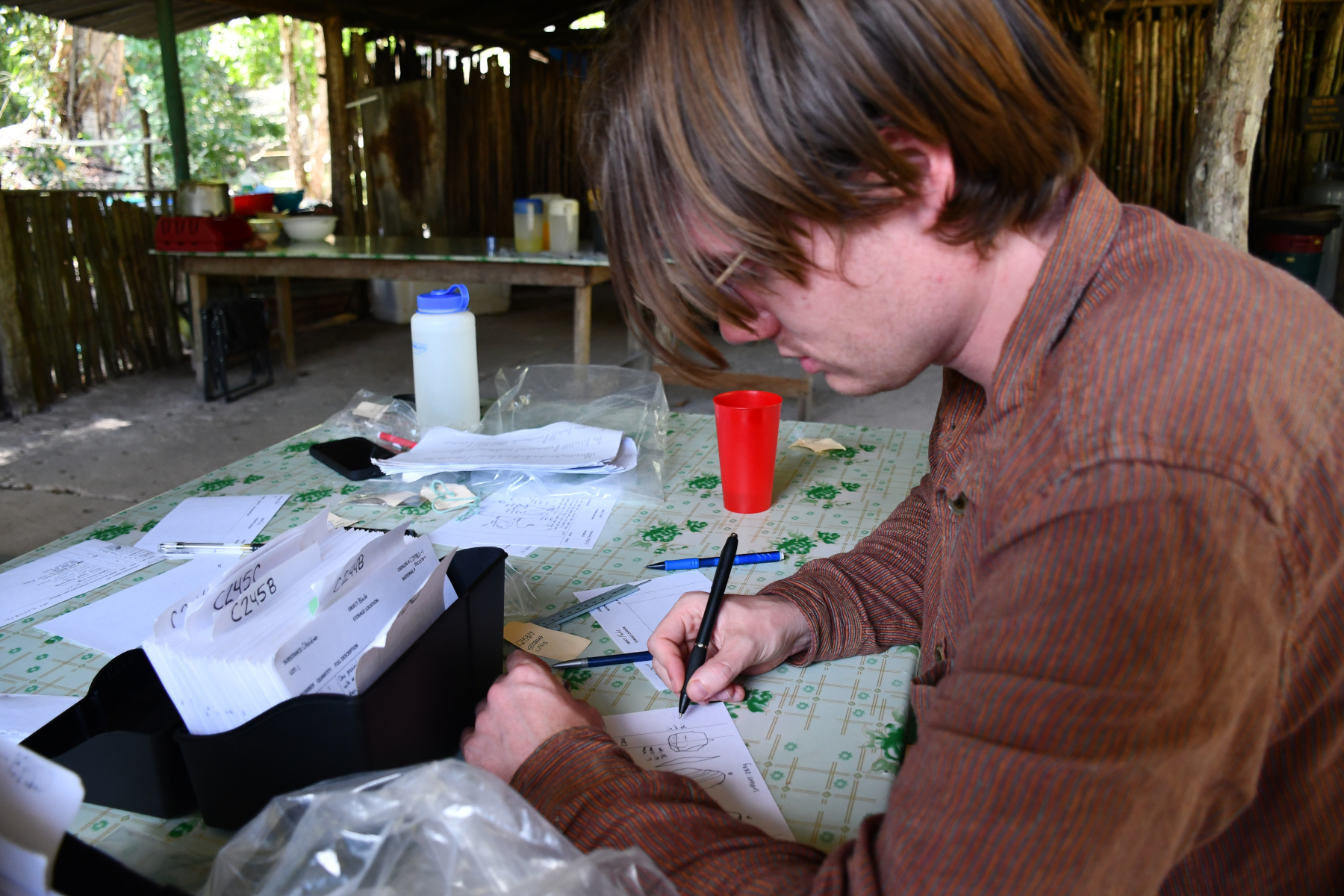
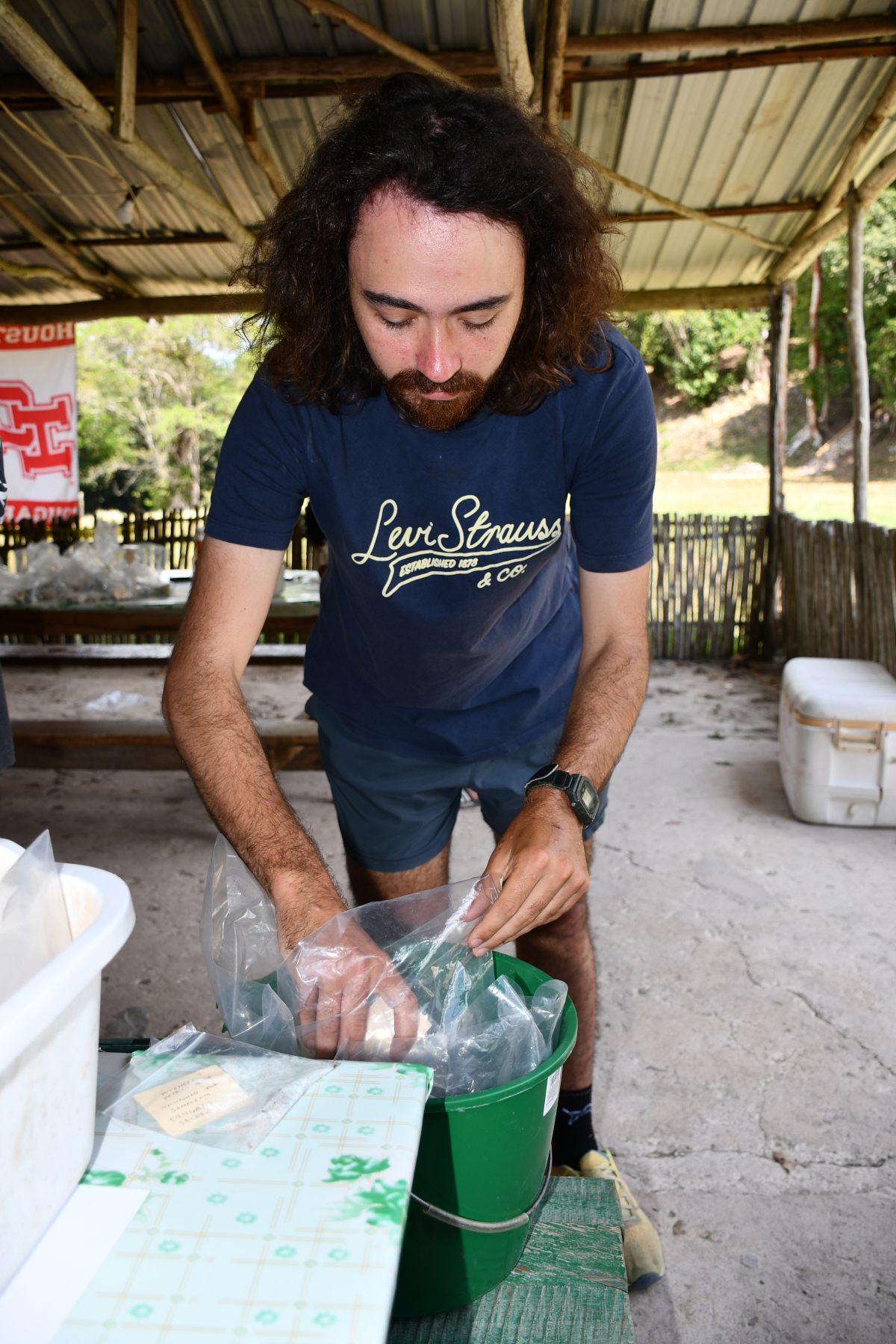
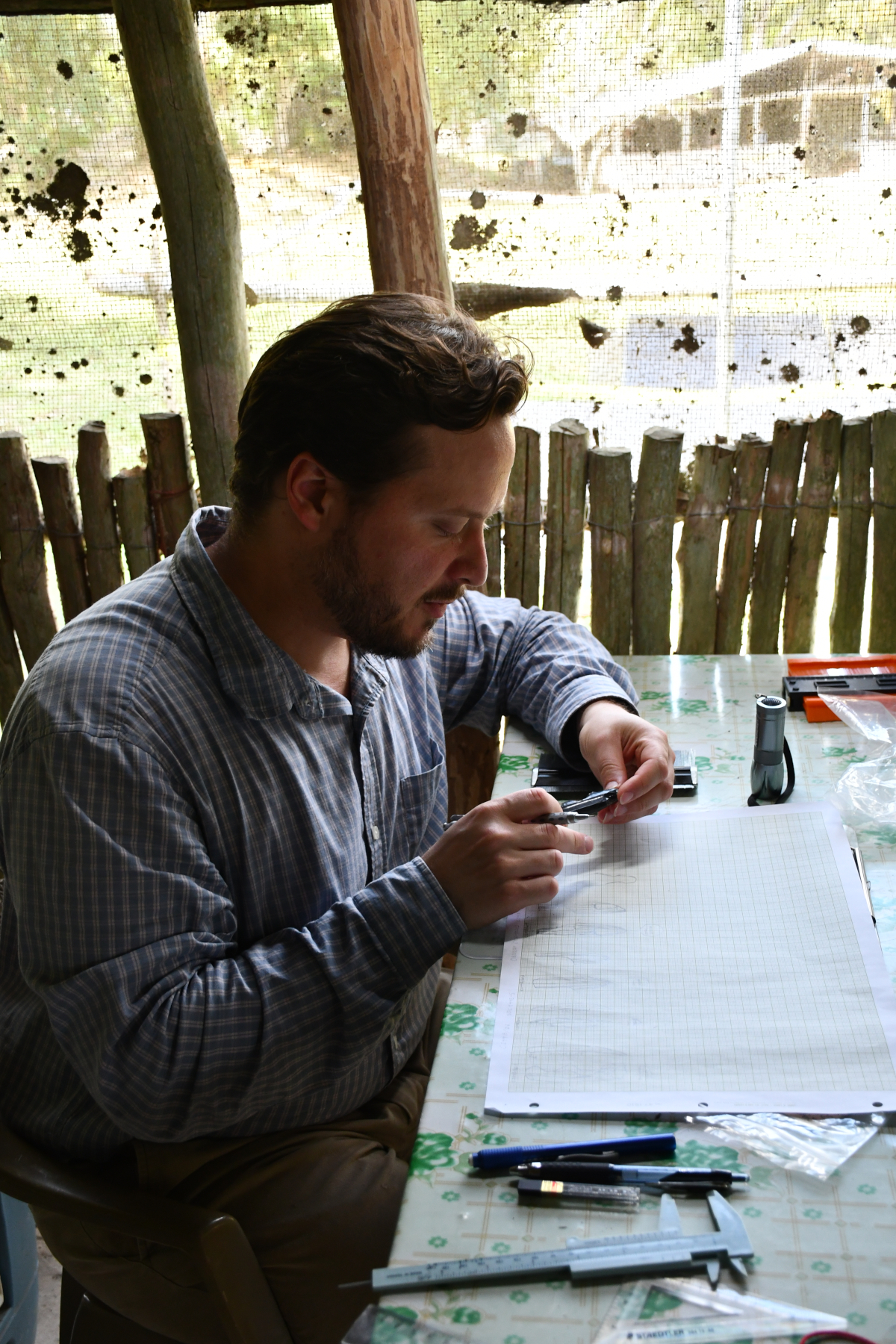
On Wednesday, all of the men moved into the lab (in this case a repurposed kitchen) to number sherds. The sherd numbering was completed by noon on Friday, resulting in five men (Ascel, Raynaldo, Jorge, Nelson, and Sotero) being taken out to Soccotz on Friday afternoon after a long season. Three men (Julio, Saul, Joel) remain for the final week to help with moving and packing as well as odds and ends. With the numbering completed, cataloguing moved into high gear for the staff with the lithics being completed on Sunday afternoon (leaving only the reconstructable ceramics to be done along with photography).
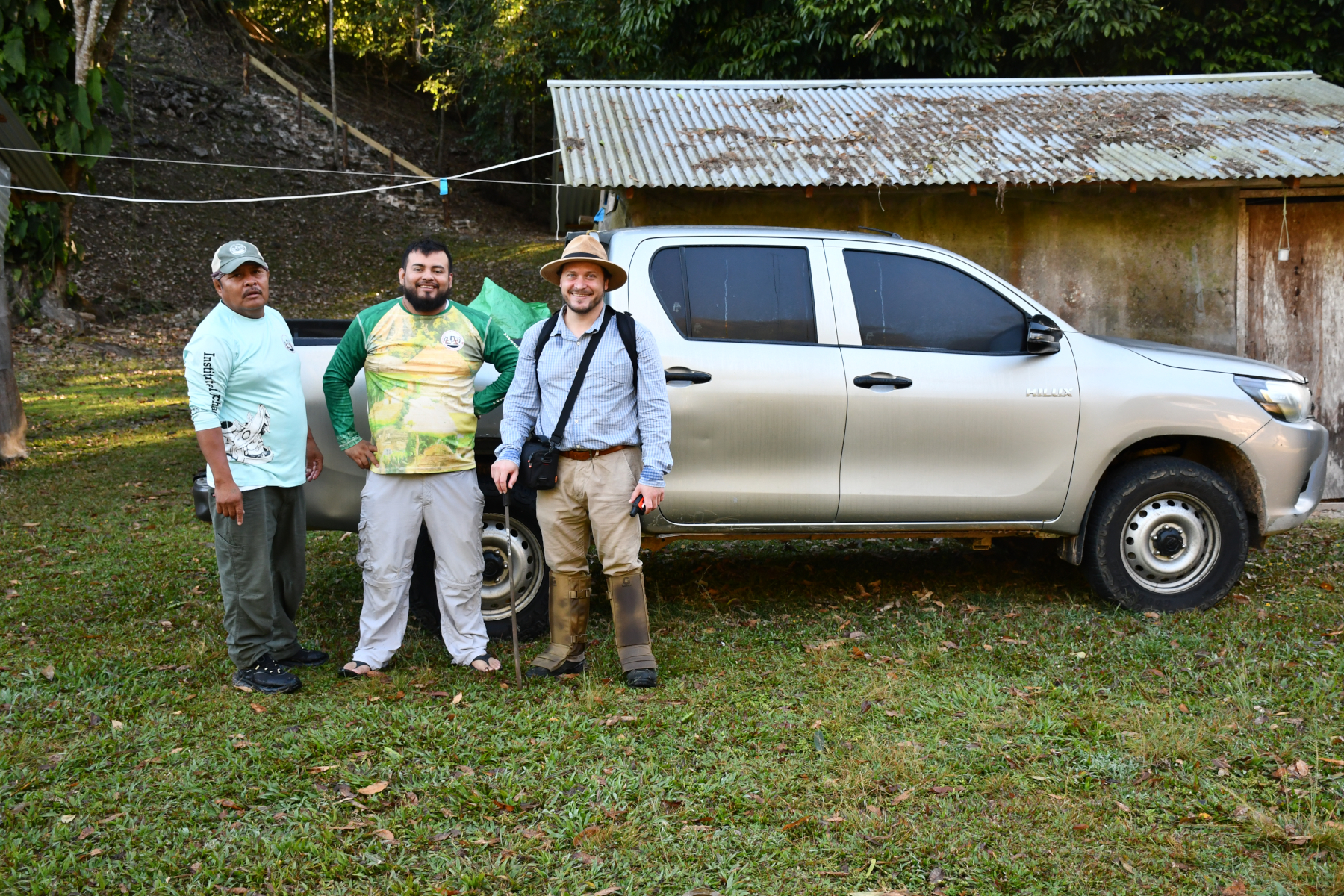
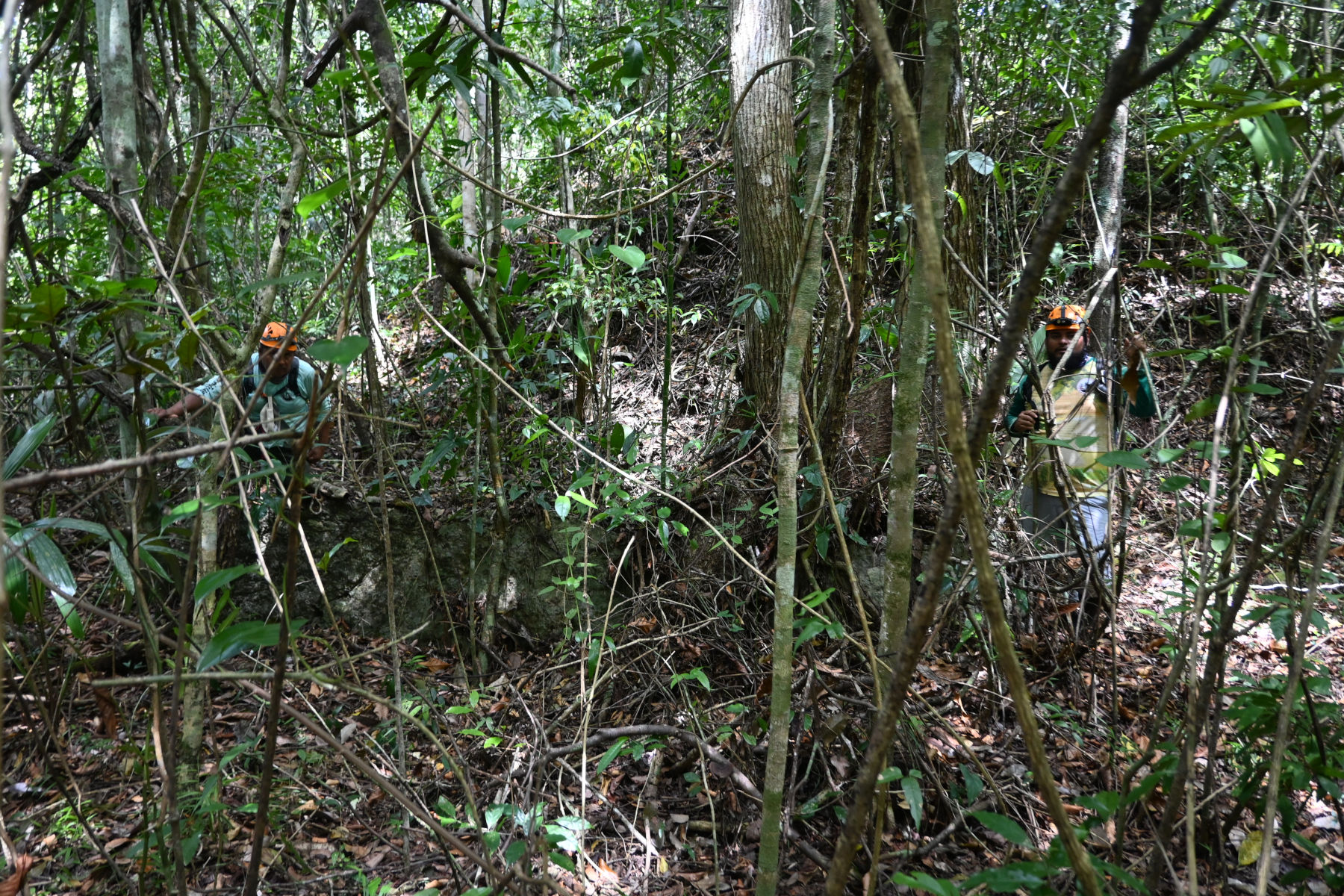
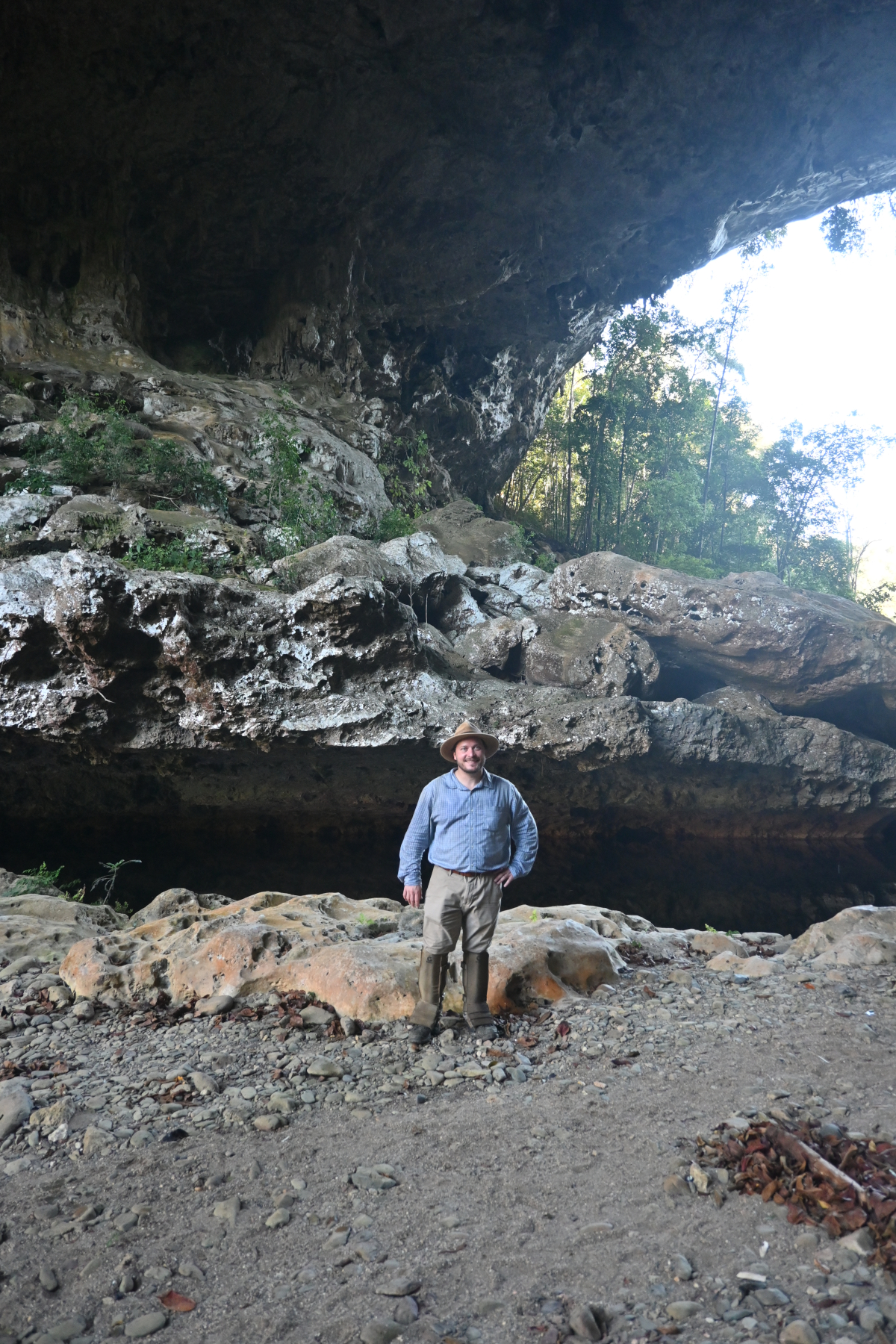
Also on Wednesday, Adrian left with Josue and Andres from the Institute of Archaeology to survey some of the sites found south of Caracol during last year’s lidar campaign. The three of them overnighted at Natural Arch and were able to look over two sites, one on the way to the Arch and one near Natural Arch. They succeeded in finding a host of structures and plazas as well as potential stone monuments. One of the monuments was a face-down stela that once had a height of over 4.5 m. The site around Natural Arch is fairly sizeable with a causeway going down to the river.
On Friday Rob Stewart from the University of Houston came into Caracol to look at our plazas and structures for possible remote sensing purposes next year. Adrian showed him around the site and discussed possible locations for using upgraded side-scanning radar and other technologies.
On Sunday Diane came into the Belize airport to help wrap up the field season. Unlike January, when it took over 3 hours to clear immigration and customs, she went through in 10 minutes.
That rock shelter looks interesting. People from every age like to stay dry during the rain.