This week saw the penetration of the various buildings that we had selected for excavation during this field season. In spite of the cold nights, the spirits of everyone are high because of what we have been encountering.
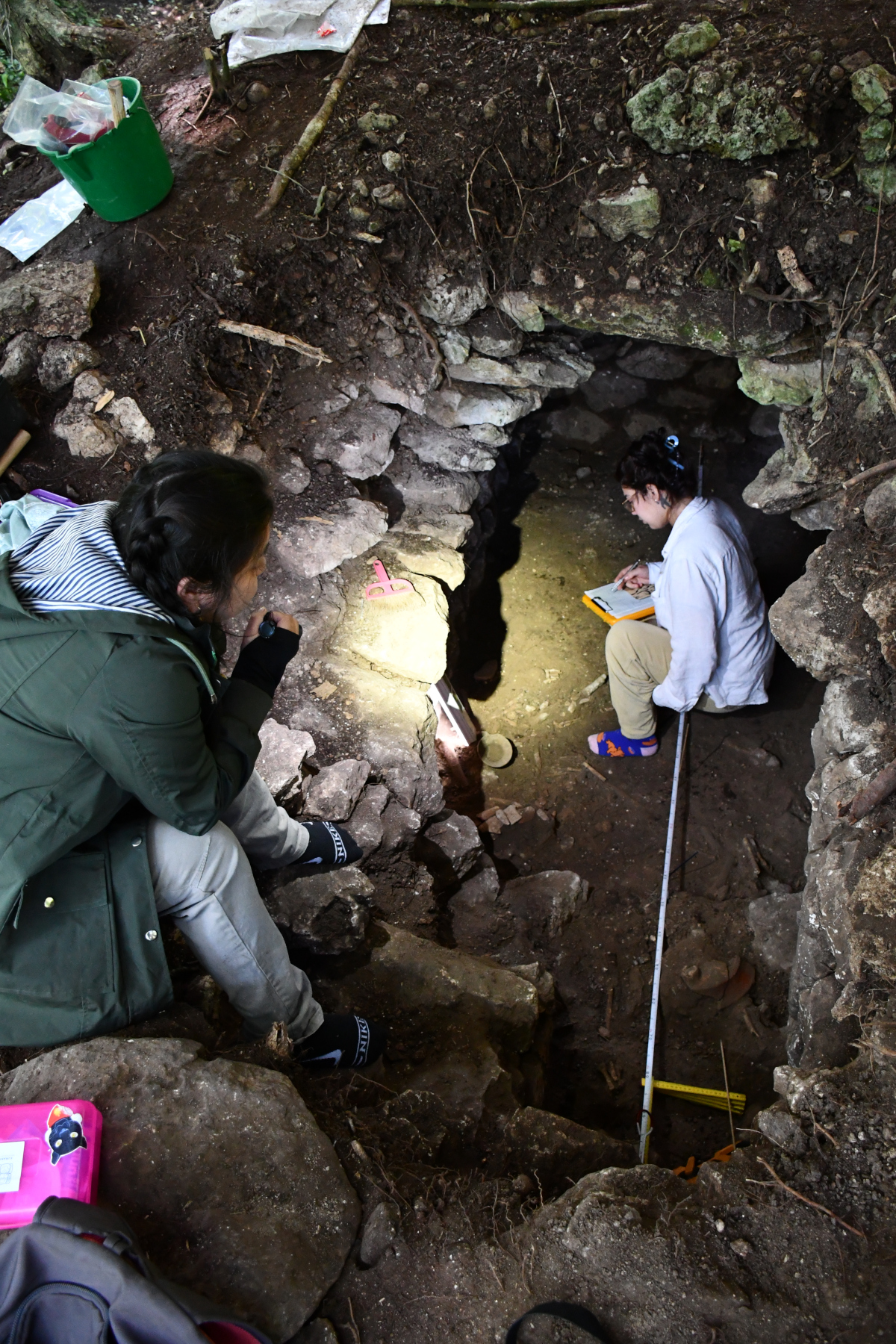
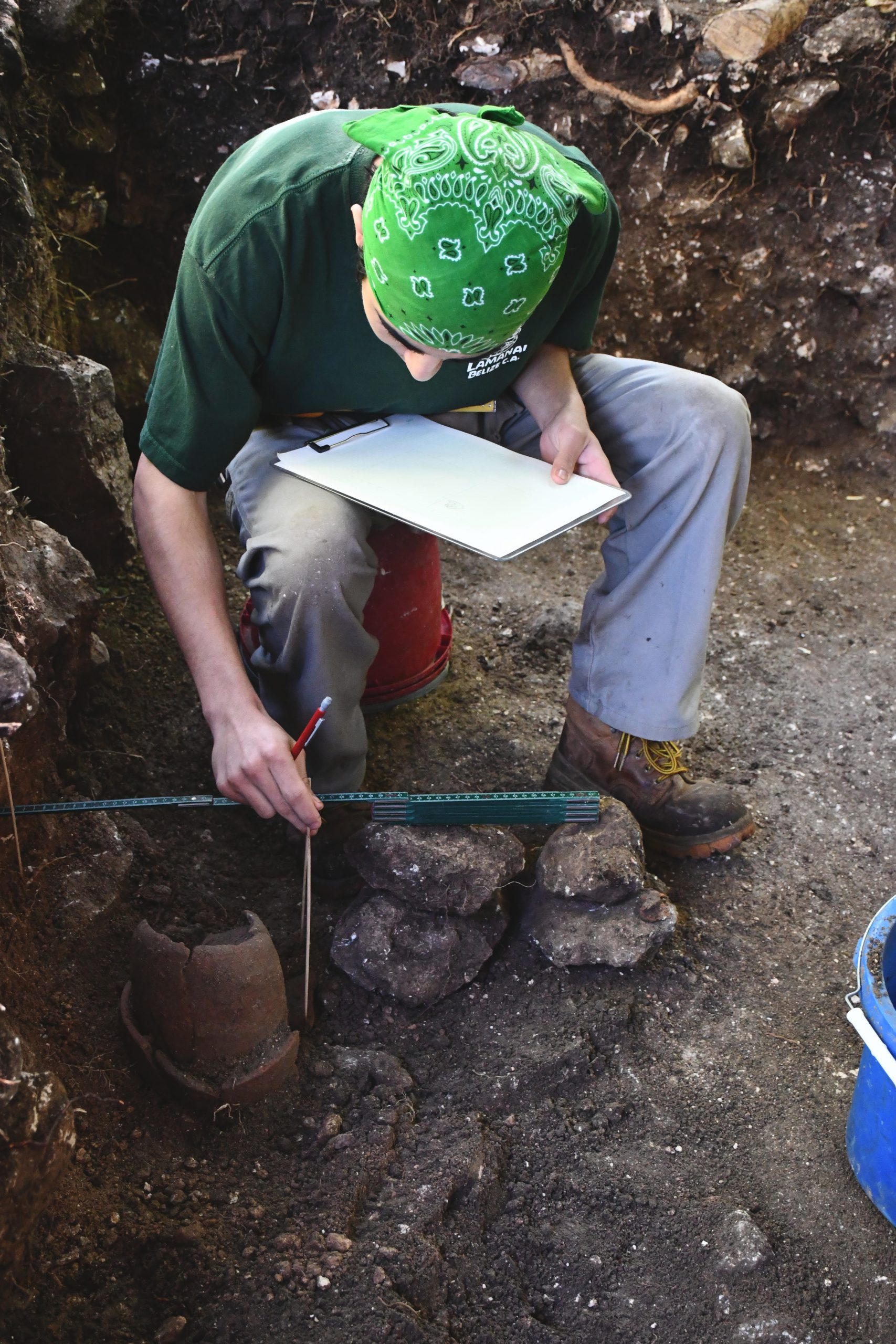
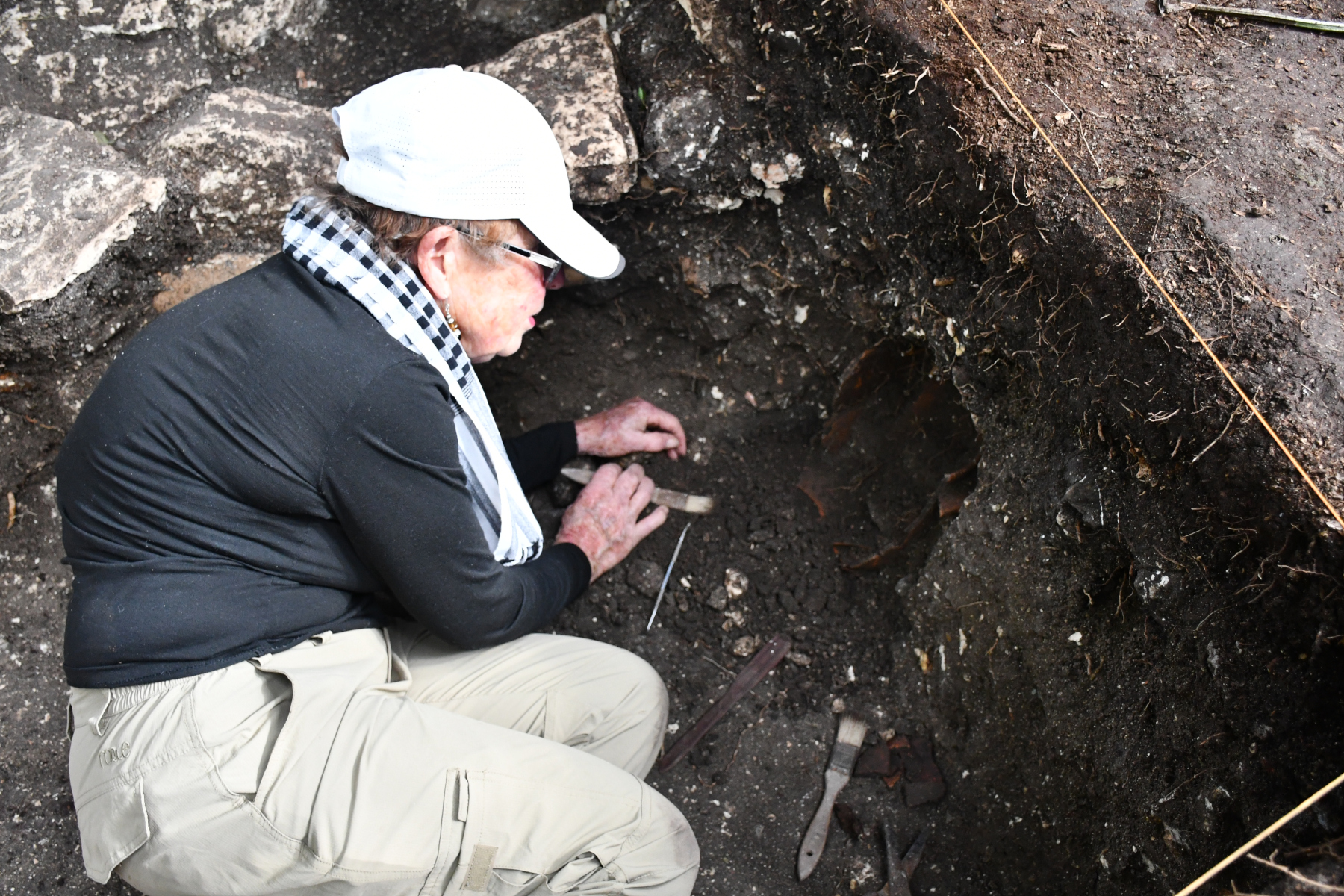
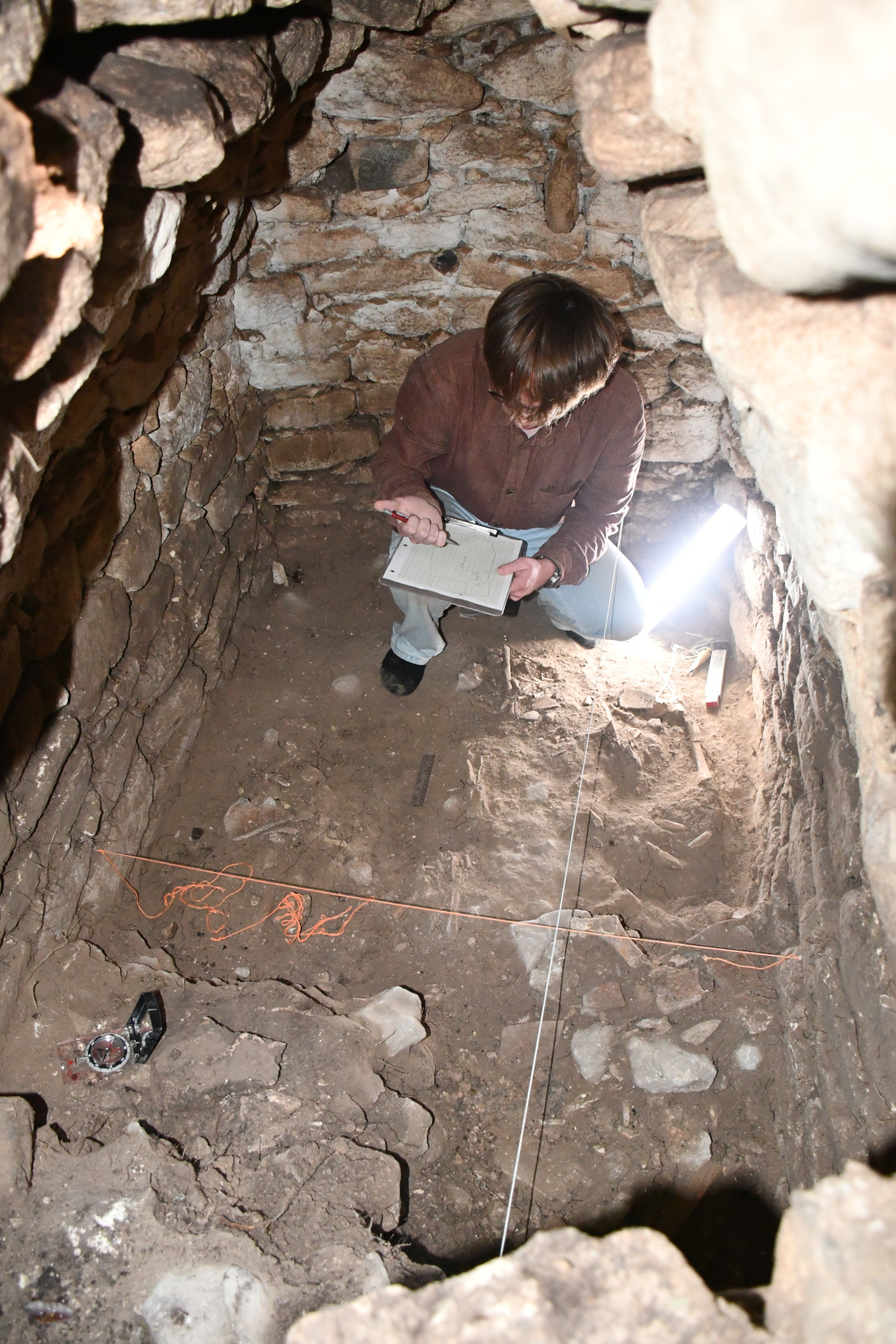
The tomb recovery exercise in Structure H9 (Operation C243B) continued all week with Gabriela, Rumari, Joel, and Edwin successfully excavating the full chamber and also the entryway for the tomb. While none of the bone was articulated, there were pieces of bone throughout the chamber with most of the pottery vessels scattered near the northern end of the tomb (along with partial and whole finger bowls). Half of an inverted tripod Belize Red plate was located in the entryway. These ceramics place the burial in the Late Classic Period. At least one individual interred in this chamber had hematite inlays.
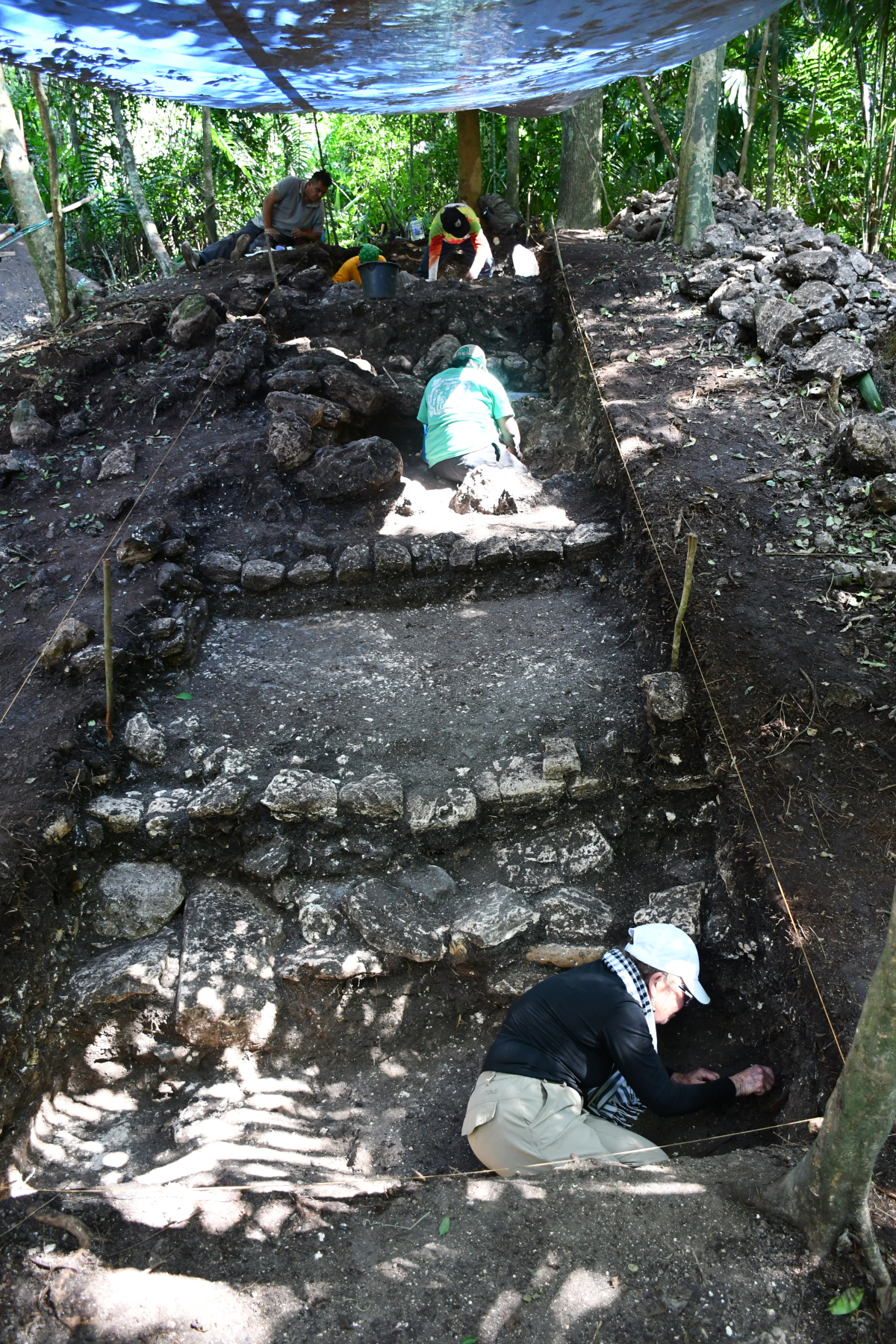
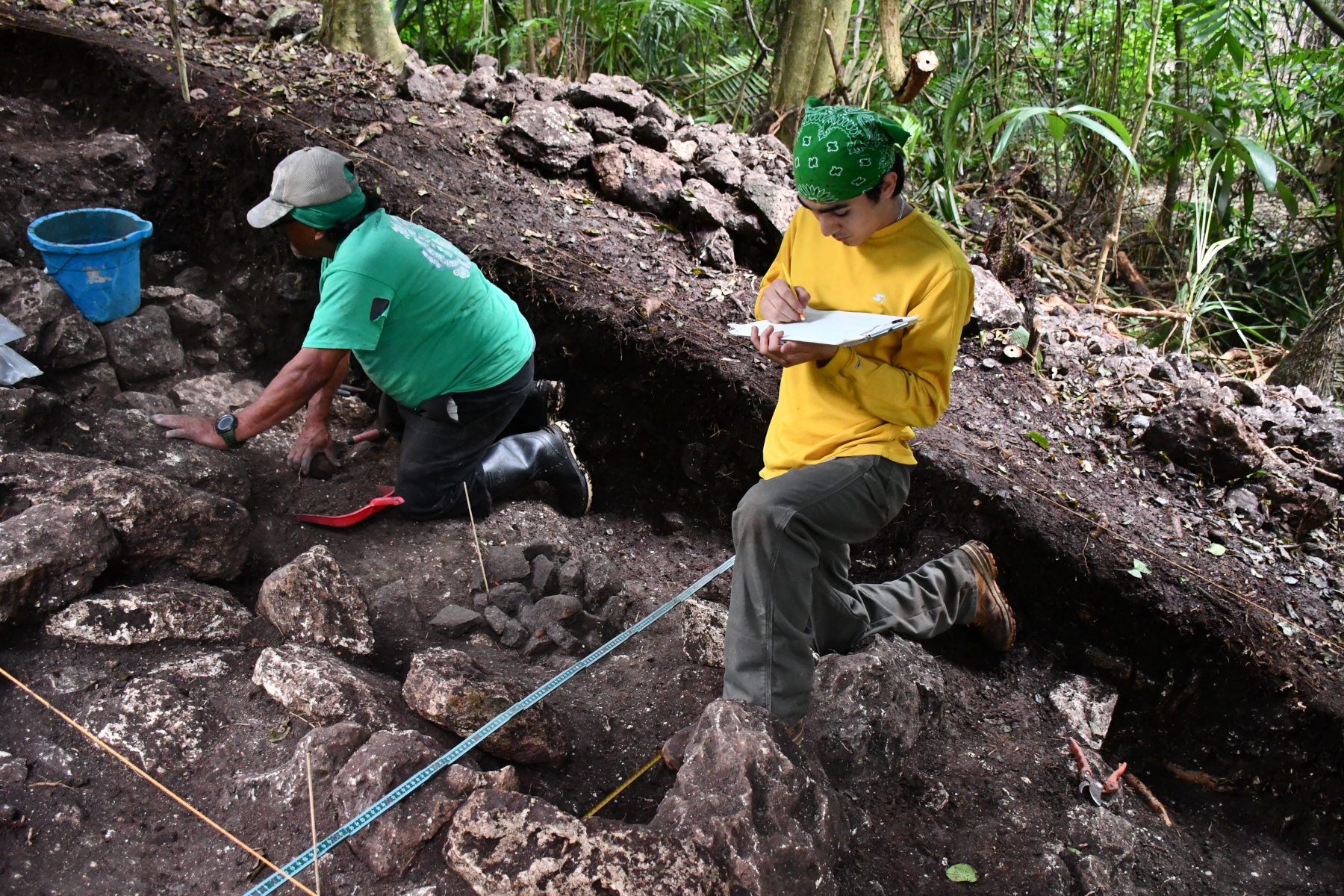
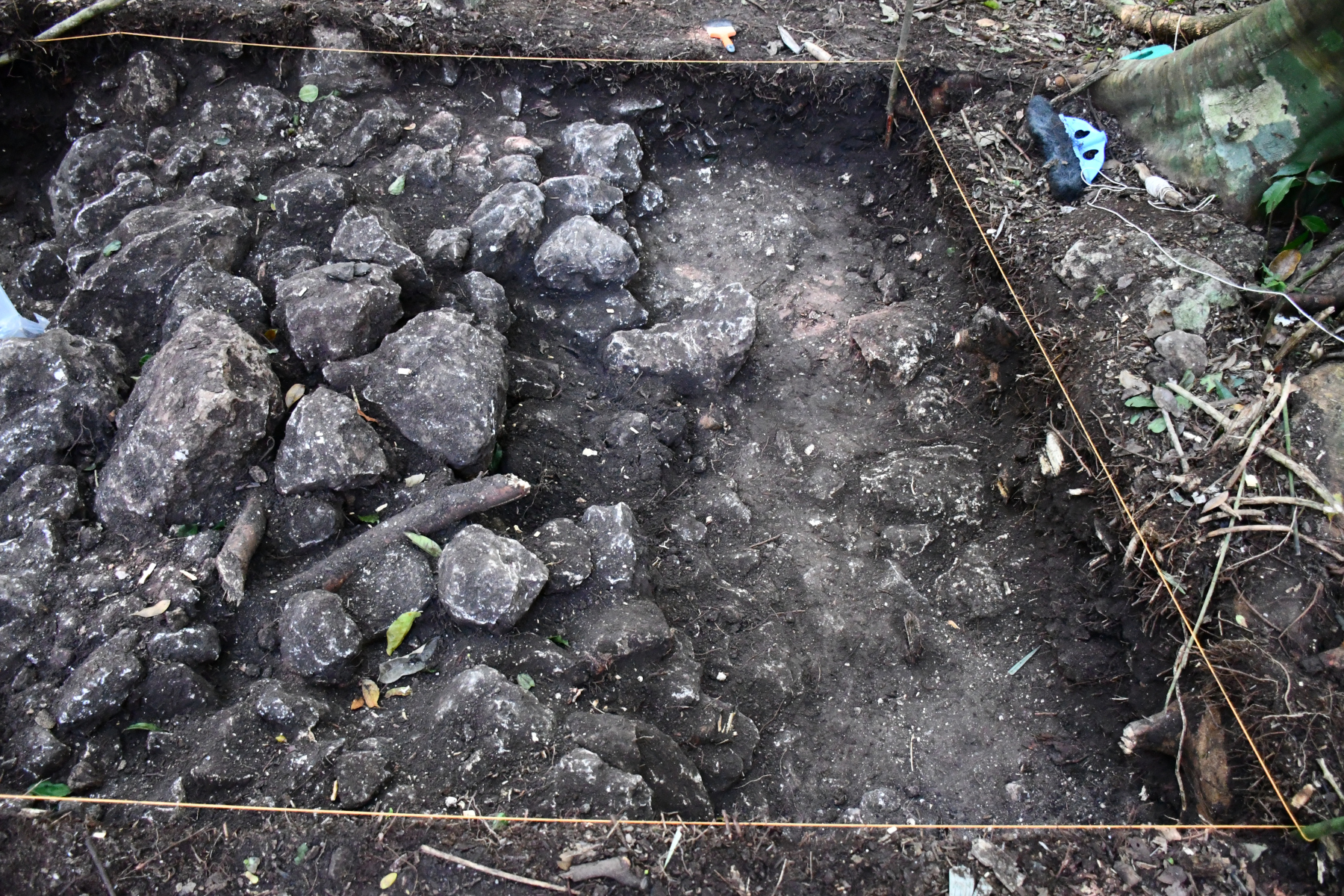
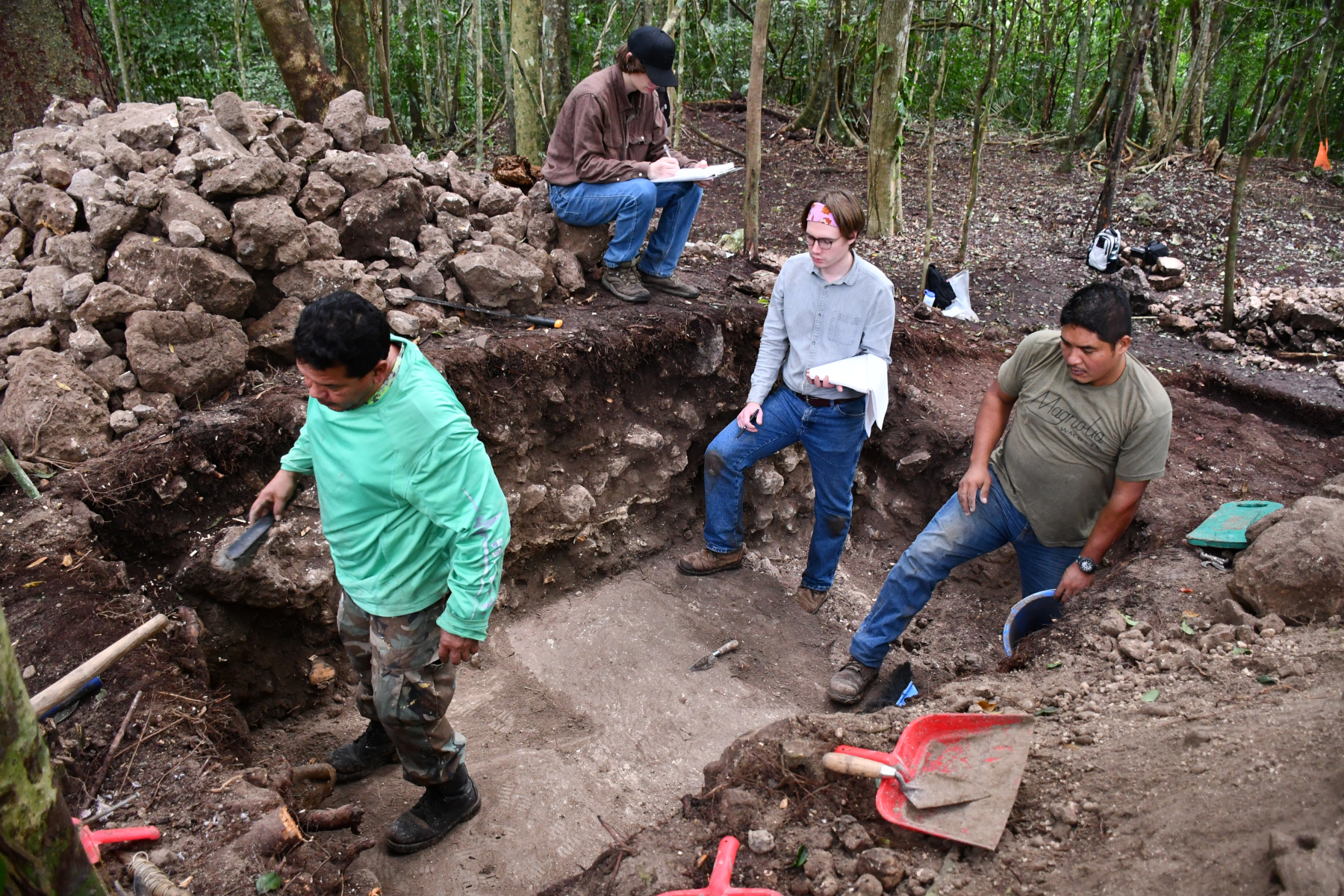
The axial trench into the east building in the Fresco residential group (nearest to Caana; Operation C244B) yielded a series of surprises this week. Removal of the humus on the front slope revealed two well preserved steps. The lower step was set atop a series of large and shaped limestone rocks that appear to be capstones for a burial; this would follow traditional Caracol patterns. The next step up the slope is associated with an architectural outset (small frontal platform?) that appears in the northern section. Behind this step is a most unusual feature. Large cut rocks protruded through the surface and looked like a wall that had fallen from the north to the south. Excavation demonstrated that there was a wall here and that it articulated with two other crude walls running north and south. Initial excavation demonstrated what appeared to be a square architectural feature surrounding an open area. In the middle of this feature, a pile of broken metate fragments was encountered (and drawn). Digging deeper, a floor was encountered, but with a human femur against the east wall on the floor and a large sherd on the floor towards the northeastern corner. In the eastern part of the trench three badly-preserved bundle interments were found, each representing a child’s burial; no burial goods were encountered. At the end of the week, a cache of two vessels (plainware barrel set in a plainware bowl) was encountered immediately south of the excavation’s northern section. Located beneath this cache were stones for an eastern architectural facing. Finally, at week’s end, a second cache, this time a face cache, was encountered in the southern section in the plaza immediately east of the lower facing.
In the Havarti residential group two excavations are underway. The smaller one is located over what appeared to be a possible eastern building (Operation C245C). By week’s end, a low front step to this building was encountered capped by a floor that led to a rubble inner core (measuring ca. 1 m wide) for a platform. Surprisingly, the surface level in front continued behind the building, indicating that the substructure continued to the east. In the axial trench through the northern building (C245B), excavation and recording continued all week on the tomb discovered in the front of this structure. However, the majority of the excavation at this locus focused on penetrating the structure summit, resulting in the recovery of six superimposed floors within the core of the building. The only other excavation in the north building took place the plaza area to its south, revealing ballast for the plaza floor and perhaps capstones for a deposit.
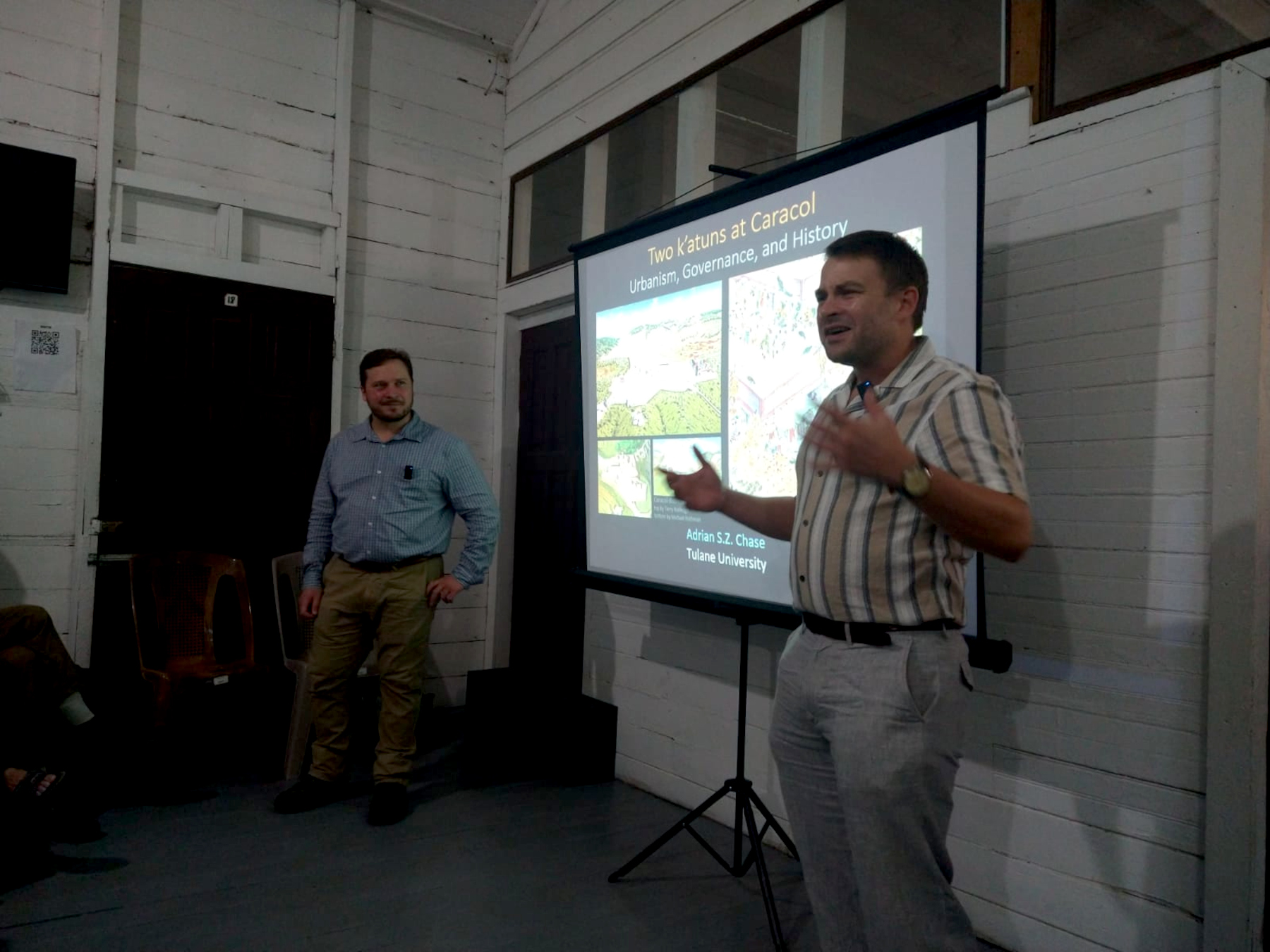
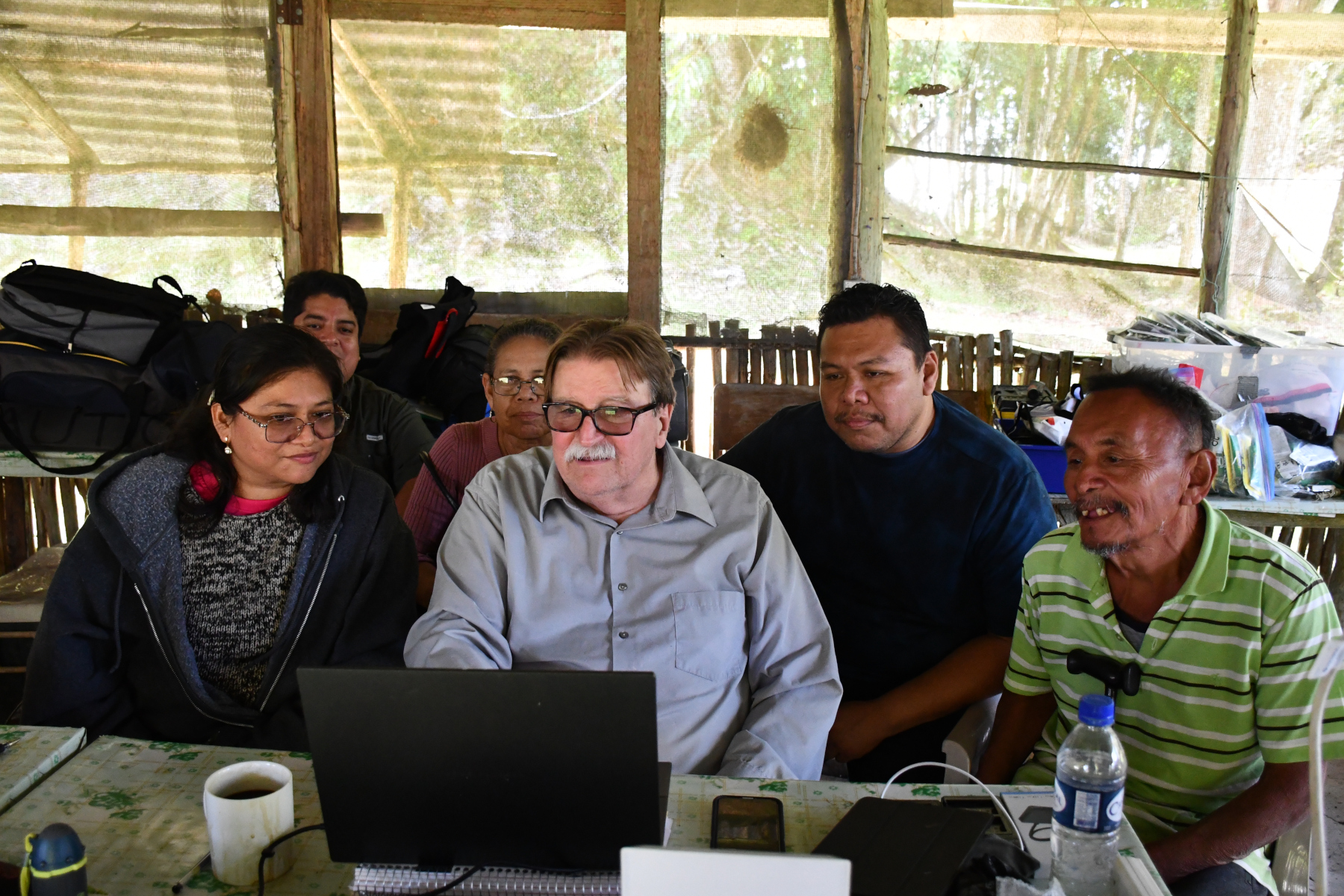
Besides the excavations, two other notable events occurred this week. First, Adrian provided a tour to John Walden’s students from Galen University at Caracol and then went out with John to give a public lecture in the Cayo House of Culture that evening. The event was well attended with lots of questions, and he returned back to Caracol (and field investigation) early Friday. Second, on Saturday the Novelos from Xaibe (Corozal District) came to Caracol for a reunion visit that had been requested before the field season. Eusebio Novelo (Coy) worked for us at both Santa Rita Corozal (excavated between 1979-1985) and at Caracol in the 1980s and 1990s. His last season at Caracol was in 1997 and Coy wished to come back and see the changes to the site (and the new road made it much easier to get here). After touring old spots, we were able to look at slides of the archaeological work at Caracol that highlighted the progress that has been made over the years as well as Coy’s contributions.
Hello to Mo from Lakeport from Jim, Georgie and Bridget. See you soon! Love the pictures of Mo’s diggings. Jim says dogs are good and bills are paid.
Hello and good luck to everyone! I hope this season goes well & you packed enough peanut butter for this season lol. I’m looking forward to seeing what yall come up with!